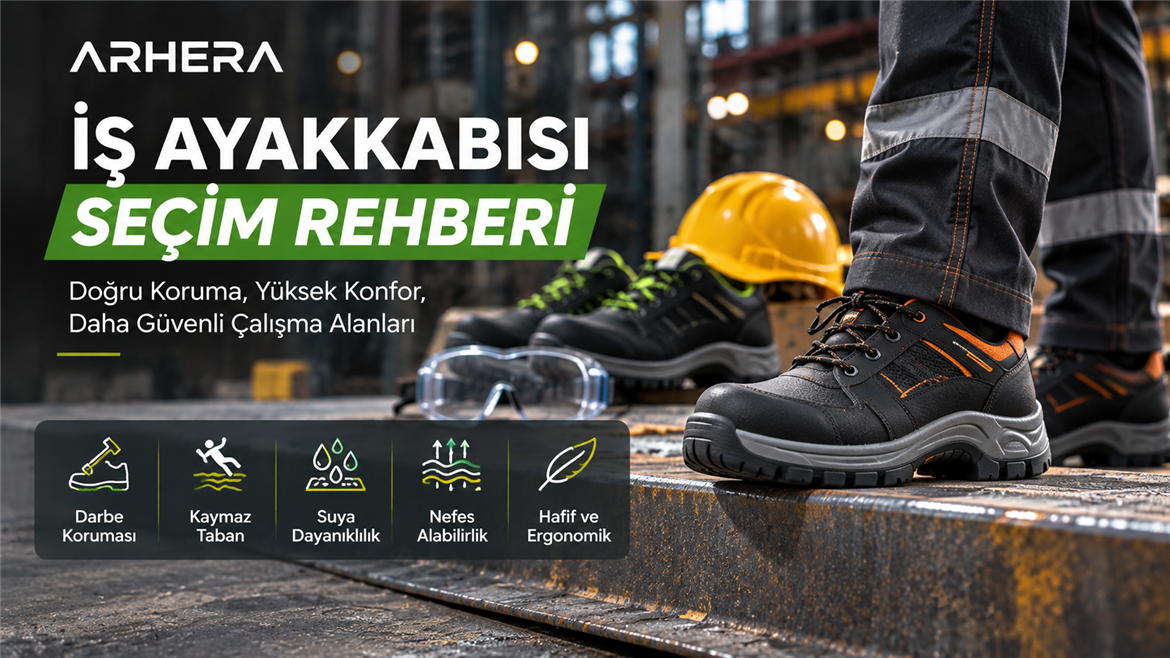
How to Choose the Right Safety Footwear: A Complete Selection Guide
Occupational safety is one of the most important aspects of protecting employees and preventing workplace accidents. In industries such as construction, manufacturing, logistics, metalworking, and heavy industry, using appropriate personal protective equipment (PPE) is essential to minimizing workplace hazards.
Among these protective products, safety footwear plays a crucial role in protecting workers against impact, compression, slipping, punctures, and other workplace hazards. However, not every type of safety footwear is suitable for every working environment.
Choosing the right safety shoes or boots requires careful consideration of workplace risks, protective features, comfort, and long-term durability.
1. What Is Safety Footwear and Why Is It Important?
Safety footwear refers to specially designed shoes and boots that provide protection against specific workplace hazards. Depending on their intended application, these products offer different protective features and must meet relevant safety requirements.
In environments where heavy materials are handled, sharp objects are present, or slippery surfaces are common, appropriate safety footwear is essential.
Selecting unsuitable footwear may increase workplace risks and cause discomfort, foot fatigue, and restricted movement during extended working hours.
2. Choosing Safety Footwear Based on the Working Environment
The first factor to consider when purchasing safety footwear is the environment in which it will be used.
Different industries involve different occupational hazards. Therefore, footwear should be selected according to the specific risks identified in the workplace.
For example, construction workers may be exposed to falling objects, sharp materials, and uneven surfaces. In these environments, footwear with appropriate toe protection, puncture-resistant soles, and reliable traction should be considered.
In food processing facilities, hygiene, ease of cleaning, and slip resistance on wet surfaces may be more important.
Understanding workplace conditions is essential to selecting suitable protective footwear.
3. Steel Toe vs. Composite Toe Safety Shoes
One of the most common protective features of safety footwear is the reinforced toe cap.
Protective toe caps are designed to reduce the risk of injuries caused by falling objects or compression.
Steel toe safety shoes feature metal protective toe caps and are widely used in construction, manufacturing, and industrial environments.
Composite toe safety shoes, on the other hand, use non-metallic protective materials. Depending on the design, they may offer a lighter alternative to traditional steel toe footwear.
However, the level of protection should not be determined solely by the toe cap material.
When selecting safety footwear, buyers should evaluate the product's certifications, test results, and suitability for the intended working conditions.
4. Why Is Slip Resistance Important?
Slips, trips, and falls are common workplace hazards, particularly in environments involving wet, oily, or slippery surfaces.
Selecting footwear with suitable slip-resistant properties can help reduce these risks.
Slip resistance depends on several factors, including outsole material, tread design, surface conditions, and the presence of contaminants.
Therefore, purchasing decisions should not be based solely on marketing descriptions such as "non-slip sole."
Instead, buyers should verify the footwear's relevant test performance and suitability for the workplace environment.
Regular inspections are also important, as worn or damaged outsoles may compromise traction.
5. Water Resistance and Breathability
For employees working outdoors, on construction sites, or in humid environments, water-resistant or waterproof footwear may provide important benefits.
However, water resistance and waterproofing are not identical.
Water-resistant footwear may provide protection against limited moisture exposure, while waterproof models are designed to offer a higher level of protection under specified conditions.
Breathability is another important consideration, particularly in warm environments or jobs requiring employees to remain on their feet for extended periods.
Breathable materials can help manage moisture inside the footwear and improve overall comfort.
When choosing safety shoes, both environmental conditions and expected wearing time should be considered.
6. What Do S1, S2, and S3 Mean in Safety Footwear?
Safety footwear is classified according to different protective requirements.
Common classifications include S1, S2, and S3, which indicate specific safety characteristics.
S1 Safety Footwear
S1 footwear provides fundamental safety features, including:
- Protective toe caps
- Closed heel areas
- Antistatic properties
- Energy absorption in the heel region
S2 Safety Footwear
S2 footwear includes the protective characteristics of S1 footwear, with additional resistance to water penetration and absorption through the upper material.
S3 Safety Footwear
S3 footwear provides the characteristics of S2 footwear, along with additional protection against sole penetration and specific outsole requirements.
Updated standards also introduce classifications such as S3L and S3S, which distinguish between different puncture-resistance requirements.
Therefore, purchasing departments should verify the applicable standard version, product documentation, and suitability for workplace hazards rather than relying solely on classification labels.
7. Ergonomics and Comfort in Safety Footwear
Protective performance is essential, but comfort is equally important for employees who wear safety footwear throughout the working day.
Workers in warehouses, production facilities, and construction sites may spend many hours standing or walking.
The weight, flexibility, cushioning, internal structure, and overall fit of safety footwear can influence daily comfort.
Incorrect sizing may cause pressure points, discomfort, and restricted movement.
For companies purchasing safety footwear in large quantities, determining employees' correct sizes and evaluating different models can help improve comfort and product suitability.
8. Common Mistakes When Purchasing Safety Footwear
One of the most common purchasing mistakes is focusing exclusively on the lowest price.
Although initial purchasing costs are important, inexpensive footwear may not always represent the most cost-effective solution.
Products that are unsuitable for workplace conditions or require frequent replacement can generate additional expenses.
Another common mistake is purchasing the same footwear model for all employees.
For example, warehouse personnel, welding operators, and outdoor construction workers may face different occupational hazards.
Therefore, safety footwear selection should be based on job responsibilities and workplace risk assessments.
Purchasing departments should also evaluate product certifications, manufacturer instructions, size availability, delivery times, and supply continuity.
9. Maintenance and Service Life of Safety Footwear
The service life of safety footwear depends on several factors, including product materials, frequency of use, workplace conditions, and maintenance practices.
There is no single replacement interval that applies to every type of safety shoe or boot.
Employees and safety personnel should regularly inspect footwear for signs of deterioration, including:
- Excessive outsole wear
- Damage to protective toe caps
- Open seams or structural defects
- Punctures or cuts
- Loss of protective performance
Footwear that may no longer provide adequate protection should be removed from service and replaced according to the manufacturer's instructions.
Proper cleaning, drying, and storage can also help maintain hygiene and preserve product performance.
10. What Should Companies Consider When Purchasing Safety Footwear in Bulk?
For manufacturers, construction companies, and industrial facilities, purchasing safety footwear involves more than simply ordering protective equipment.
Employee safety, product suitability, operational requirements, and supply continuity should all be considered.
When purchasing large quantities, companies should establish clear technical specifications, determine size distributions, and plan procurement schedules.
Cooperation between purchasing departments and occupational health and safety teams can help reduce the risk of selecting unsuitable products.
Working with a reliable industrial supplier can also support efficient procurement processes and help companies obtain products that meet their operational requirements.
Conclusion: The Right Safety Footwear Is an Essential Part of Workplace Safety
Choosing appropriate safety footwear requires a comprehensive evaluation of workplace hazards, protective requirements, ergonomics, and environmental conditions.
No single safety footwear model is suitable for every industry or working environment.
By selecting products that meet the specific requirements of each application, companies can support employee safety, improve comfort, and manage their procurement processes more effectively.
At ARHERA, we provide industrial procurement solutions covering technical hardware, industrial materials, and personal protective equipment.
We support businesses in sourcing products that meet their operational requirements and purchasing needs.
For safety footwear and other personal protective equipment requirements, contact ARHERA to discuss suitable product options and request a quotation.
Do Comment